REP Provisions on the land doing regenerative work

What is Regenerative Agriculture?

Regenerative agriculture is a farming method that heals our soil and waterways by working alongside nature - not against her.

2:1omega-6:3 ratio in REP beef, vs. ~15:1 conventional. Tested by Edacious. See the results
Holding a handful of healthy regenerative soil
Healthy soil makes food more nutritious and delicious.

Drag to see the difference

Illustration of regenerative agriculture
Illustration of conventional agriculture
◀ DRAG ▶
RegenerativeConventional

Regenerative

Diverse grasses, living roots all year, cattle moving across the land.

Conventional

One crop, bare soil, synthetic inputs, shallow roots.
Testing soil health on a REP pasture
Doing the workChecking the soil, pasture by pasture.
REP cattle grazing on open pasture
The herdGrass-fed, grass-finished, on open pasture.

01 · Better for you

Regenerative Agriculture: Nutrition

  • Regenerative foods contain greater concentrations of essential minerals, vitamins, and nutrients than conventionally farmed foods.
  • Monocultures and factory farming increase rates of nutrient deficiency.
  • 100% grass-finished beef raised on regenerative farms is significantly more heart healthy due to its more balanced omega-3:omega-6 fatty acid profile.

Omega-3 share of omega fats

Based on the 2:1 vs. ~15:1 omega-6:3 ratios: 1 part in 3 is omega-3 for REP beef, about 1 in 16 for conventional.

2×monounsaturated fats
80%fewer unstable fats
0heavy metals detected

Independent testing by Edacious. See the full lab results →

02–04 · The animals, the ranchers, the land

Better for everyone it touches

Swipe →
02 · The animals

Animal Welfare

  • 100% pasture-raised; animals eat a natural diet.
  • They live in the sunshine, forage, and breathe fresh air.
  • Healthy environments breed healthy livestock.
  • We never use antibiotics, hormones, mRNA vaccines, pesticides, or GMOs; because of how our animals live, we don't need to.
03 · The ranchers

Farmers and Ranchers

  • By expanding production from one product to many, farmers generate higher incomes and greater job security.
  • REP rewards farmers that transition to regenerative methods by paying them far more than they could get in the conventional markets.
  • Putting more money in farmers' pockets is not only good for them but for the local economy in their rural communities.
04 · The land

Systemic Solutions

  • Built on decades of long-term research and indigenous communities, regenerative agriculture empowers us to tackle some of humanity's largest issues.
  • Keeping soils covered via cover crops or grasslands builds resilience to flood and drought.
  • Rotational grazing pulls carbon from the atmosphere and puts more organic matter in the soil.
  • Grazing also mitigates the risk of invasive species and wildfires.
  • No pesticides = better air + water quality.
Storm clouds over a green pasture
When the rain comes, healthy soil holds on to it.

Healthy soil at work

Where does the rain go?

Covered soil full of roots soaks up rain like a sponge and holds it for dry months. Bare, compacted soil sheds it, and the water runs off with topsoil.

Soaked in 0%
Ran off 0%

Simplified illustration of how soil takes in water, not measured data.

Rotational grazing

Why we keep the herd moving

Our cattle graze one paddock, then move to fresh grass. The pasture they leave rests and regrows, and its roots grow deeper each time. Press Play, then switch to continuous grazing to see what happens when cattle never move.

–avg. grass height
–rest per paddock

Simplified model: 8 paddocks, herd moves every 4 days.

Cattle on American regenerative pasture
15000+acres of grassland positively impacted through our regenerative farmer network.
100%American farms and ranches. No imports, ever.
0antibiotics, hormones, mRNA vaccines, pesticides or GMOs.

Why regenerative farming matters

“Soil is where the health of our entire system begins.”

Regenerative methods support a chain where soil microbes feed the soil, soil feeds plants, plants feed livestock, and this exchange continues up the food chain all the way to us humans. The food that you're eating today is far less nutritious than it was 50 years ago.

Prescribed burn moving across grassland
Prescribed fireRenewing the grassland the way nature always has.

The building blocks

5 Principles of Regenerative Agriculture

Although regenerative agriculture is far more nuanced than a list of bullet points could ever express, we all need to start somewhere. It can be helpful to think of the 5 principles of regenerative agriculture as building blocks, which can be arranged according to the unique needs, context, and goals of a specific farm or ranch.

Swipe →
1

Minimize soil disturbance

Less tilling and fewer chemicals keep soil structure and life intact.

2

Keep the soil covered

Grass and cover crops shield soil from sun, wind and erosion.

3

Maximize diversity

More plant and animal species build a stronger ecosystem.

4

Keep living roots in the ground

Roots all year feed soil microbes and hold soil together.

5

Integrate livestock

Grazing animals cycle nutrients and wake up grass growth.

Taste the difference

Regenerative Beef, From Our Ranches to Your Table.

Raised on American regenerative pasture and lab-tested by Edacious. Same grass, same results, every box.

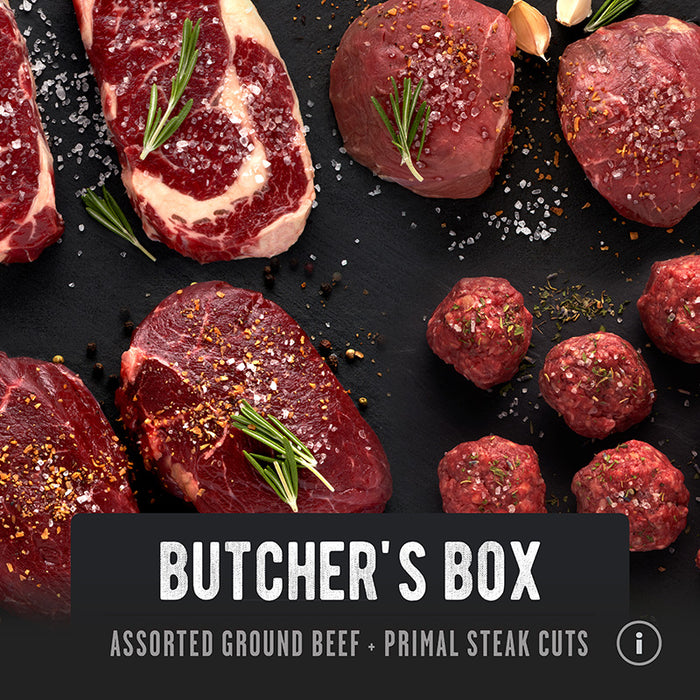
MOST POPULARAssorted grass-fed steaks and ground beef from the Butcher's Box, seasoned on slate

The Butcher's Box

$290.95

Five pounds of ground beef, filets and primal cuts. The mix our butcher would pick.

Shop now
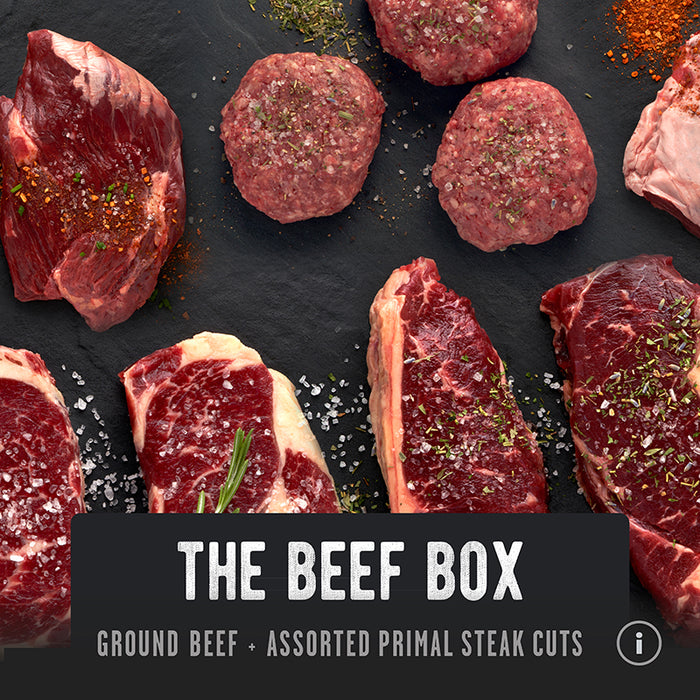
The Beef Box: grass-fed ground beef, ribeye steaks and NY strip steaks

The Beef Box

$243.77

Ground beef, ribeyes, NY strips and flank. A good first look at the whole animal.

Shop now
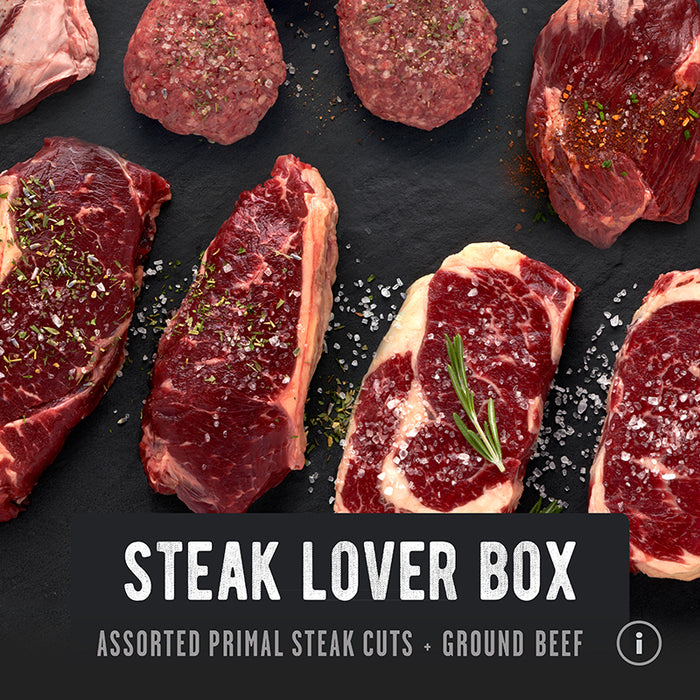
Grass-fed ribeye, NY strip and filet steaks with salt and rosemary on a dark surface

The Steak Lover Box

$238.95

Ribeyes and strips with ground beef for the weeknights in between.

Shop now
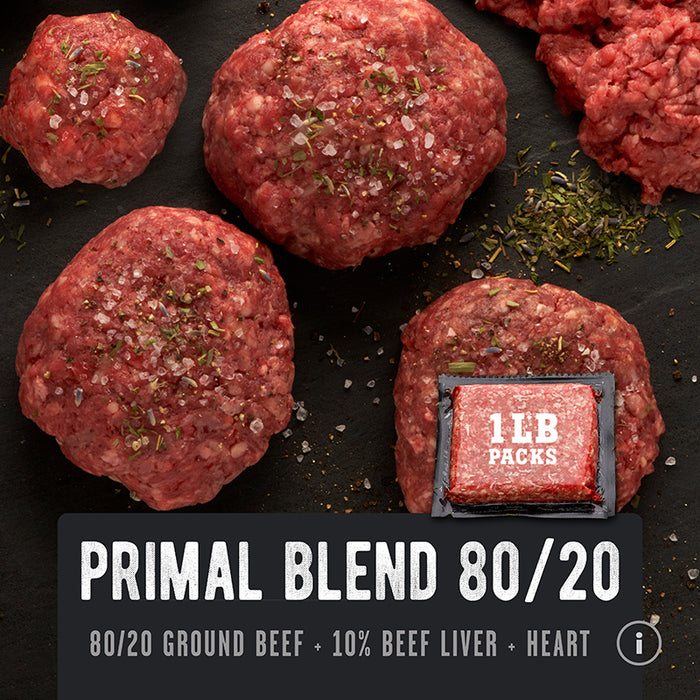
Primal Blend 80/20 grass-fed ground beef with 10% beef liver and heart

Primal Blend 80/20

From $79.75

Our bestselling grind: 80/20 with 10% liver and heart ground in.

Shop now

Regenerative Agriculture FAQs

What does regenerative mean?

Regenerative agriculture is a conservation and rehabilitation approach to farming. It focuses on topsoil regeneration, increasing biodiversity, improving the water cycle, enhancing ecosystem services, supporting carbon sequestration, and restoring degraded land.

What is regenerative meat?

Regenerative meat comes from animals raised using holistic practices on land that is being regenerated, so the animals improve the land they live on.

What are the benefits of regenerative agriculture?

Improved water and air quality, greater biodiversity, more nutrient-dense food, and more carbon stored in the soil. REP beef has been independently tested by Edacious, showing a 2:1 omega-6:3 ratio compared with about 15:1 in conventional beef.

What is grass-fed, grass-finished and pasture-raised?

Grass-finished means the animal ate only grass its entire life. Grass-fed can include grain at the end. Pasture-raised means the animal lived outdoors on pasture. REP beef is all three.

What is rotational grazing?

Rotational grazing moves livestock between paddocks so each pasture can rest and recover, which lets roots grow deeper and the grass come back stronger.

How does regenerative meat help fight climate change?

Grasslands pull carbon from the air through photosynthesis and store it in the soil. Ruminant animals like cattle, when they're grazed well, help grasslands do this at their full capacity.

Regenerative beef
Free shipping $175+
Shop now